
In Divergence Point, I propose one possible way to glimpse this hidden architecture. The scene appears at first to be symmetrical: two figures sit inside transparent cubes, mirrored across the canvas. But the symmetry is deliberately unstable. The shadows don’t align with their sources, and slight distortions in space disrupt the illusion of balance. These inconsistencies are meant to evoke a sense of quiet dissonance, inviting the viewer to look closer and question the reliability of what they see.
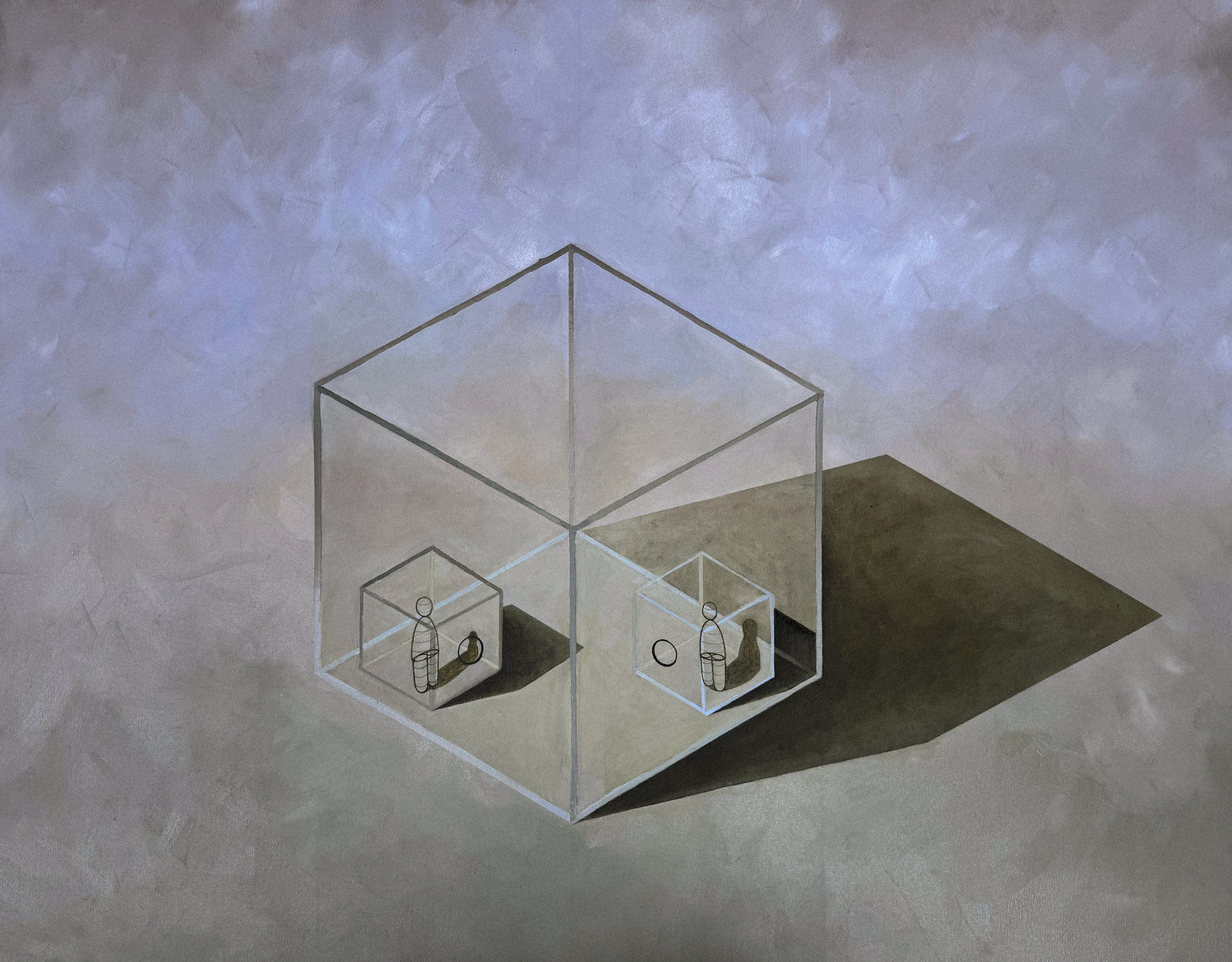
Divergence Point, 2025 | oil on canvas, 110 x 85 cm
The transparent cubes function as metaphors for perception itself, clear yet enclosing. They represent the version of reality we are able to access, from within, without the ability to step outside of it. They also suggest the possibility that there may be greater systems surrounding us, which we remain unaware of simply because we are inside them.
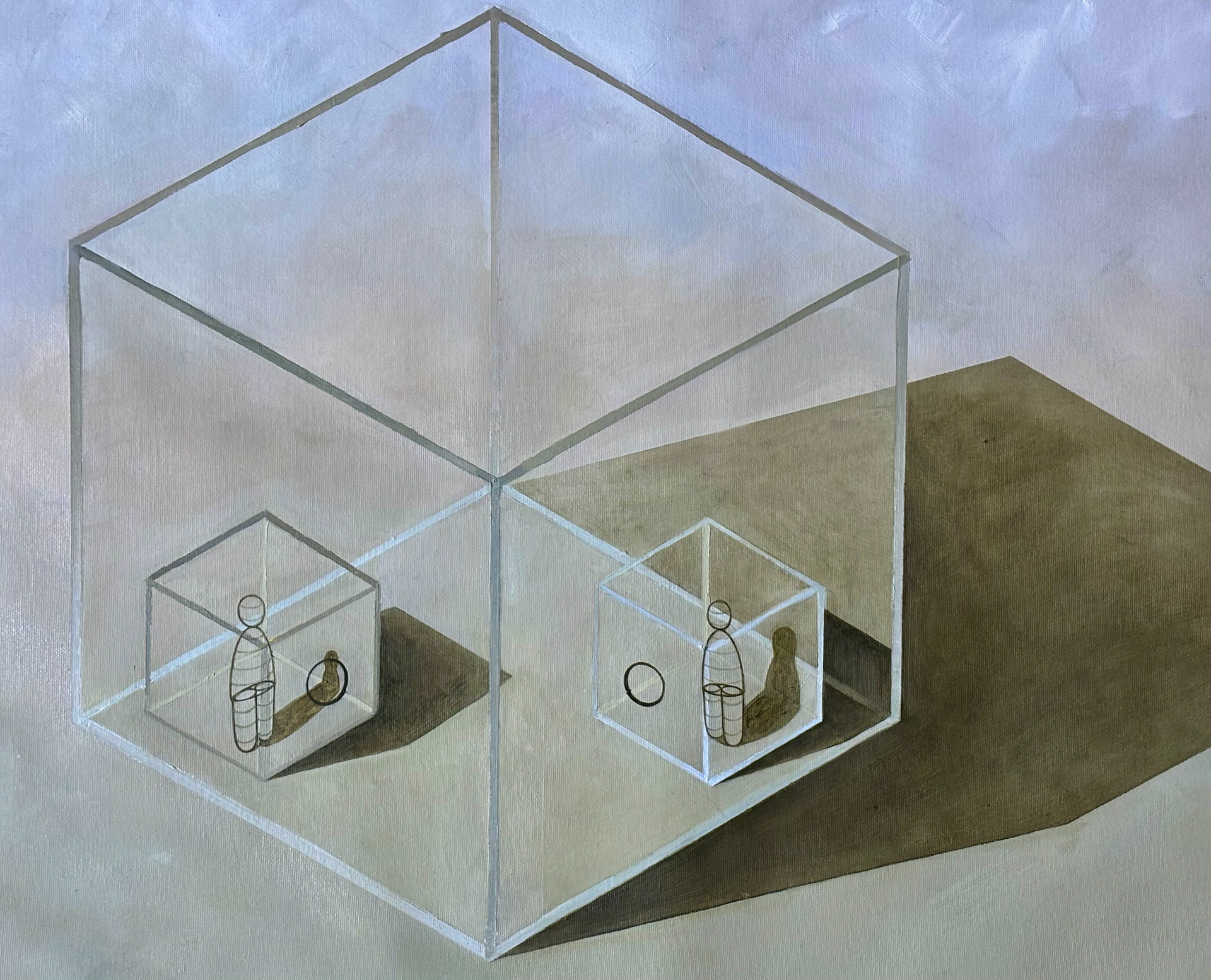
This conceptual framework draws inspiration from quantum mechanics particularly Hugh Everett’s Many Worlds Interpretation and David Deutsch’s continuation of that theory. According to this view, reality is not linear or singular, but rather a branching structure where all possible outcomes exist simultaneously in parallel worlds. These coexisting realities are not accessible to each other, yet they unfold side by side, echoing one another in form while differing in detail.
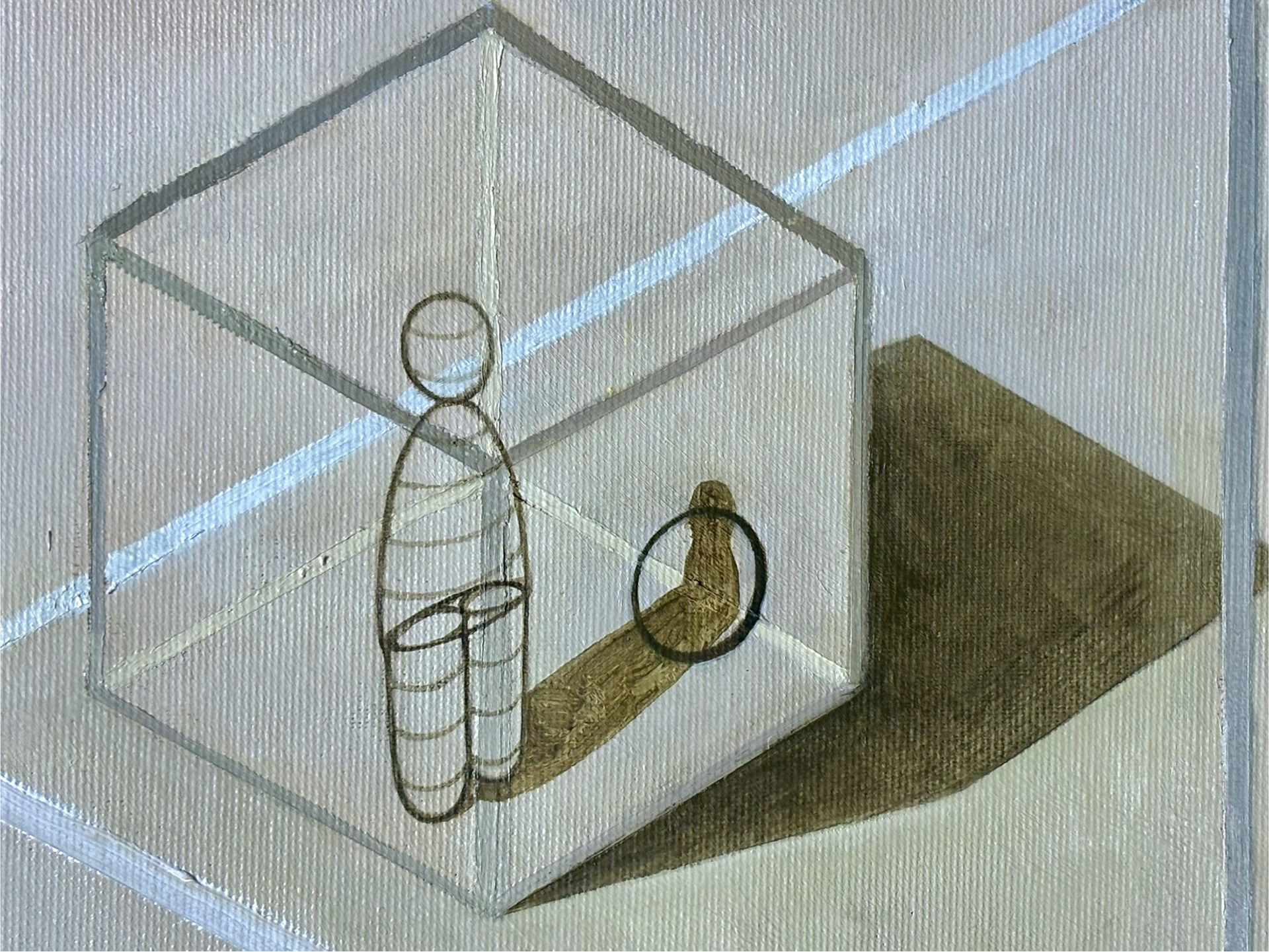
My painting seeks to evoke this sense of multiplicity as a plausible structure of existence. The figures in their cubes may be two versions of the same self, or two entirely separate entities that mirror each other across dimensions. They inhabit the same compositional space, but do not interact. They are close, but isolated, similar but never identical.
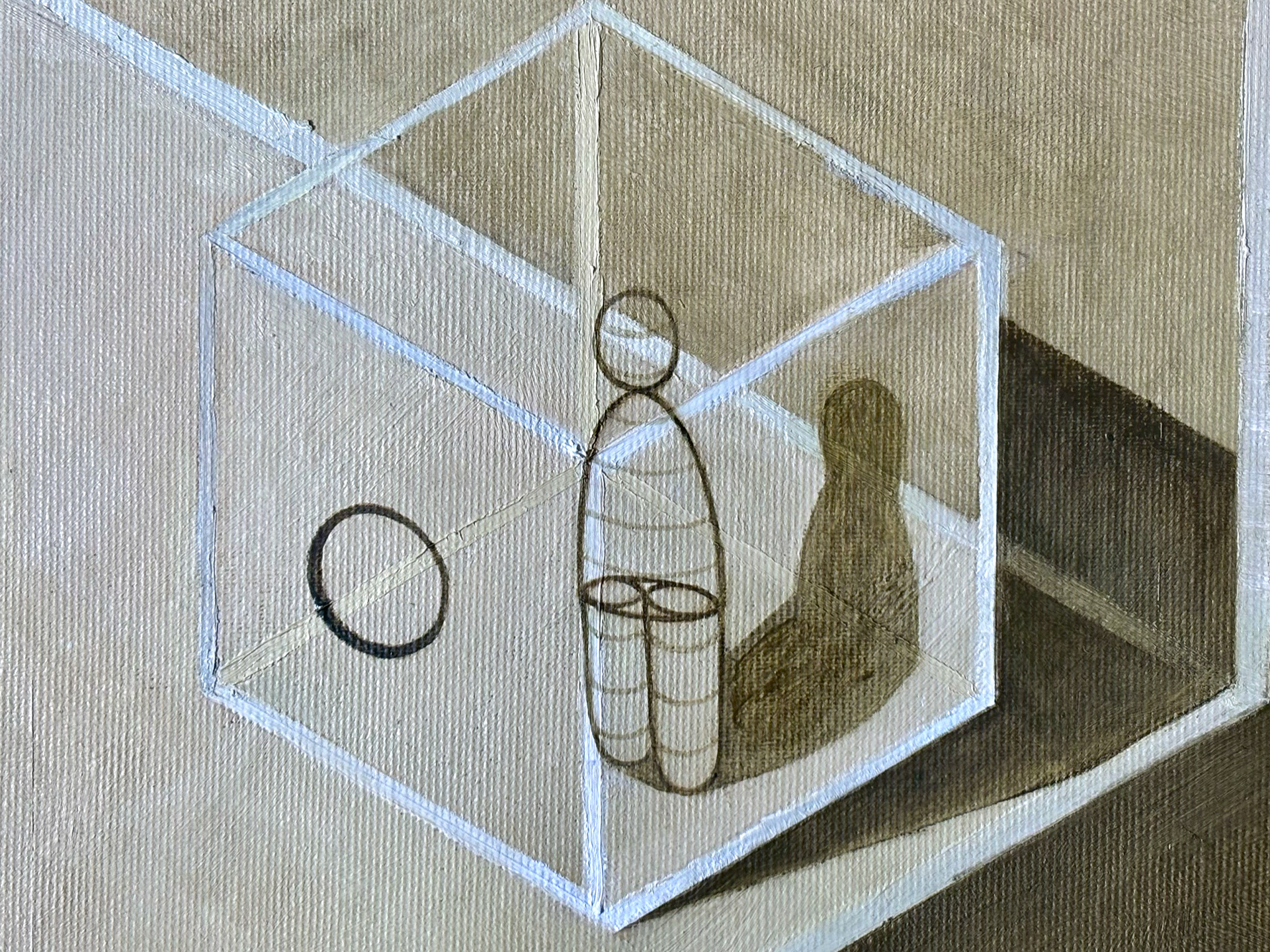
Through this visual language, I aim to reflect on the instability of what we call reality, and the possibility that what appears coherent may in fact be fragmented, layered, and endlessly unfolding.